
If you’re searching for practical ways to cook smarter, save time, and keep your meals fresh throughout the week, you’re in the right place. This article is designed to give you clear, actionable guidance on building wholesome meals, pairing ingredients thoughtfully, and making the most of your kitchen routine. Whether you’re new to planning ahead or looking to refine your system, you’ll find strategies that simplify your workflow without sacrificing flavor.
We’ve gathered insights from culinary professionals, nutrition-focused cooks, and real-world kitchen testing to ensure every recommendation is both reliable and easy to apply. From global flavor inspiration to foundational techniques, you’ll learn how to create balanced dishes and preserve their quality with smart meal prep food storage tips that actually work.
By the end, you’ll feel confident organizing your week, reducing waste, and serving meals that are as nourishing as they are delicious.
Your Guide to Fresher, Safer Meal Preps
Ever spend Sunday cooking for the week, only to open Wednesday’s container and find soggy greens, dry chicken, or something that smells “off”? It’s maddening. Meal prepping promises calm and savings, yet improper storage quietly steals flavor, texture, and safety. You waste time, money, and good intentions.
This guide fixes that. Rooted in practical food science, these meal prep food storage tips form a simple system to keep meals fresh all week.
• Smart cooling, airtight containers, and strategic layering protect taste and safety.
No guesswork—just reliable habits that make prep efficient again.
Start with the Right Gear: Your Container Toolkit
Glass vs. Plastic
When choosing containers, the glass versus plastic debate matters. Glass is non-porous, meaning it will not absorb stains or odors, and it can move from fridge to oven safely. However, it is heavier and can break. BPA-free plastic is lightweight, affordable, and practical for busy weeks, yet it may warp or degrade over time. (Yes, that tomato sauce will leave its mark.)
Why Airtight Is Non-Negotiable
Next, focus on the seal. Airtight simply means no air gets in or out. Oxygen speeds up spoilage and dulls flavor, according to the USDA. Look for silicone gaskets and locking lids that snap firmly shut.
The Power of Compartments
Meanwhile, compartments solve the soggy lunch problem. By separating wet foods from dry ones, you protect texture and taste. Think sauce apart from roasted vegetables until lunchtime. (No one wants mushy quinoa.)
Choose the Right Size
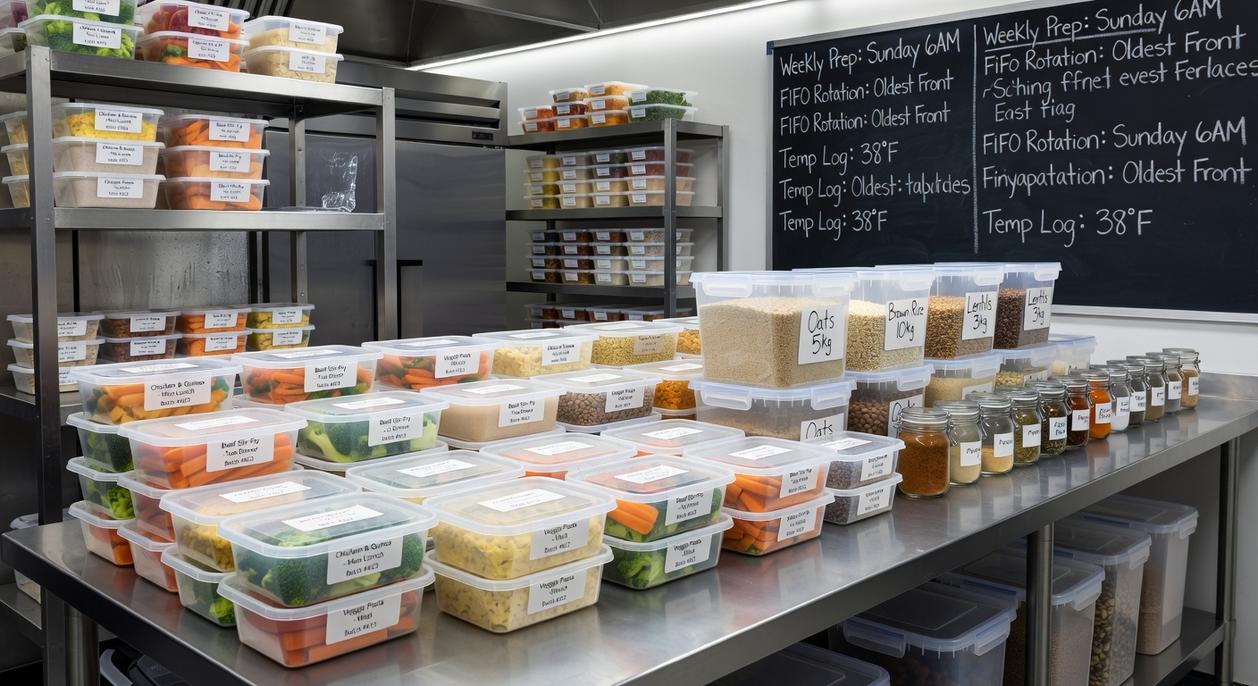
Finally, match the container to the portion. Extra space traps air, which increases spoilage and freezer burn. Pro tip: fill containers nearly to the top. For more meal prep food storage tips, label dates and rotate older meals forward. This simple system keeps food fresher longer and reduces waste, saving money and time each week in your kitchen.
The Most Important Step: Cooling Before You Store
Before leftovers hit the fridge, understand the Temperature “Danger Zone”—the range between 40°F and 140°F (4°C to 60°C) where bacteria multiply rapidly (USDA). Your mission? Move food through this zone fast. Think of it like getting out of rush-hour traffic; the longer you sit, the worse it gets.
A vs B: Cooling Methods Compared
| Scenario A | Scenario B |
|---|---|
| Large hot pot placed directly in fridge | Food divided into shallow containers |
| Cools slowly, traps heat | Cools სწრაფly, increases surface area |
| Raises overall fridge temp | Keeps other foods safe |
Safe Cooling Techniques: Split soups, grains, or casseroles into smaller containers. For stews, try an ice bath—set the pot in ice water and stir (a pro-level move that chefs swear by).
And remember the Two-Hour Rule: refrigerate cooked food within two hours. Even the best meal prep food storage tips can’t outsmart bacteria if you wait too long.
A Place for Everything: Storing Different Foods Correctly
Great cooking gets the spotlight. Great storage is what makes it sustainable. If you’ve ever opened your fridge to find slimy spinach or dry chicken, you already know why smart systems matter.
Leafy Greens and Salads
Moisture is the enemy here. Line your container with a dry paper towel to absorb excess condensation and prevent wilting. This works because excess surface moisture accelerates spoilage by promoting microbial growth (USDA). Always store dressing separately in a small, leak-proof container—acid breaks down delicate greens fast. (No one likes accidental soup.)
Cooked Grains (Rice, Quinoa)
Grains lose moisture in the fridge due to starch retrogradation—a process where starch molecules recrystallize and harden (Institute of Food Technologists). To prevent clumping and dryness, drizzle a small amount of olive oil or water before storing, then fluff with a fork before sealing. Pro tip: store grains slightly under-packed so steam can dissipate before sealing.
Cooked Proteins (Chicken, Beef, Fish)
Store proteins in dedicated containers to prevent cross-contamination. Keep them on a lower fridge shelf to avoid drips onto ready-to-eat foods (FDA guidance). While some argue airtight stacking saves space, separation preserves both flavor and safety.
Roasted Vegetables
Cool completely on the baking sheet before transferring. Trapped steam equals mush. Do not overcrowd the container—air circulation preserves texture. Think crisp edges, not soggy regrets.
Soups, Stews, and Sauces
These shine in leak-proof mason jars or deli containers. Flavors deepen overnight as compounds redistribute (Harold McGee, On Food and Cooking). Leave headspace for expansion if freezing.
Cut Fruits and Vegetables
A squeeze of lemon or lime slows browning by reducing oxidation. Store carrots and celery in a small amount of water to maintain crispness.
For more structured systems, see how to meal prep for the week in under two hours.
These meal prep food storage tips go beyond basics—because efficiency isn’t just about cooking faster. It’s about storing smarter.
The 4-Day Fridge Rule isn’t arbitrary. The USDA states cooked leftovers should be eaten within 3–4 days when refrigerated at 40°F or below (USDA Food Safety and Inspection Service). After that window, bacterial growth—even if invisible—accelerates. The CDC notes pathogens like Listeria can still multiply slowly in the fridge, which is why day five becomes risky.
For meals planned beyond day four, freeze immediately after cooling. At 0°F, microbial growth effectively stops, preserving both safety and texture. Research from the FDA confirms freezing maintains nutrient stability in most cooked foods.
Best candidates for freezing:
- Soups, stews, chilis, and curries
- Cooked grains and beans
- Burritos and casseroles
Label every container with the name and date (future you will be grateful).
Avoid freezing cream sauces, leafy salads, or high-water vegetables like cucumbers; ice crystals rupture cell walls, causing mushiness when thawed.
These meal prep food storage tips aren’t fussy—they’re evidence-backed safeguards.
Let’s be honest: the hardest part of meal prepping isn’t cooking—it’s keeping everything fresh. The success of your meal prep hinges entirely on how you store the food you’ve worked hard to create. In my experience, flavor fades fast when storage is sloppy.
So, what works?
- Cool food quickly before sealing to prevent sogginess and bacteria growth.
- Use airtight, portion-sized containers to lock in texture.
- Store sauces and toppings separately to preserve crunch.
Follow these meal prep food storage tips and you guarantee meals that stay vibrant. Next time you cook, apply basics and taste the difference.
To ensure your prepped meals stay fresh longer, it’s essential to use airtight containers and proper temperature settings, especially if you’re planning to enjoy dishes like the ones featured in our article on the best Italian recipe at Tbfoodtravel – for more details, check out our What Is The Best Italian Recipe Tbfoodtravel.
Bring More Heart to Every Meal
You came here looking for smarter, more flavorful ways to cook with intention—and now you have the foundations to do exactly that. From global flavor pairings to efficient kitchen systems, you’re equipped to turn everyday ingredients into meals that feel nourishing, inspired, and deeply satisfying.
But let’s be honest—without structure, even the best intentions fade. The real pain point isn’t knowing what to cook. It’s finding the time, staying organized, and keeping food fresh enough to enjoy throughout the week.
That’s where smart planning and practical meal prep food storage tips make all the difference. When your kitchen works for you instead of against you, wholesome cooking becomes effortless—not overwhelming.
Now it’s your move. Start by choosing one flavor profile to explore this week. Prep your base ingredients in advance. Store them properly. Build flexible meals that evolve with your schedule.
If you’re ready to simplify your routine, reduce waste, and bring more intention to every plate, put these strategies into action today. The right system transforms stress into flow—and your next delicious, heart-centered meal starts now.
