

You want healthy, home-cooked meals—but not at the cost of your entire weekend. If spending hours in the kitchen every Sunday sounds exhausting, you’re not alone. This guide is built for anyone searching for a smarter way to cook once and eat well all week. We’ll break down practical, flavor-focused batch cooking strategies that help you prepare multiple meals efficiently without boredom or burnout. Rooted in real culinary experience and streamlined kitchen principles, these methods show you exactly how to save time, reduce cleanup, and create a week’s worth of satisfying meals in far less time than you expect.
The Blueprint: Strategic Planning for Success
I learned this the hard way after a Sunday where I cooked five different recipes—and somehow had nothing cohesive to eat by Wednesday. Since then, I’ve followed one simple rule: plan with overlap in mind. If I’m roasting sweet potatoes for a grain bowl, I make extra and blend them into soup later. It’s efficient, cost-effective, and honestly feels like kitchen wizardry (the good kind, not the chaotic kind).
Some argue meal prep kills spontaneity. I get that. But structure doesn’t eliminate creativity—it supports it. When ingredients cross over, you gain flexibility, not rigidity.
Try this approach:
- Choose recipes with shared ingredients to reduce waste and decision fatigue.
- Build a cross-utilization shopping list organized by produce, protein, and pantry.
- Time-block a 2–3 hour prep session and map your order: grains first, vegetables roasting next, proteins last.
This is where batch cooking strategies truly shine. Multitasking—while quinoa simmers and vegetables caramelize—creates momentum. (Standing around waiting for water to boil is not a strategy.)
Pro tip: wash and chop all produce before turning on heat. It keeps the workflow smooth and prevents the dreaded mid-recipe scramble.
Planning isn’t restrictive. It’s the blueprint that makes the week feel deliciously manageable.
Mastering the Art of Batch Cooking
If you’ve ever stared into your fridge like it’s a Netflix homepage—overwhelmed, uninspired, and somehow convinced there’s “nothing to eat”—this is where batch cooking strategies shine.
Grains and Legumes First. Start with versatile foundations like quinoa, brown rice, farro, or lentils. These are your culinary background actors—quietly essential, endlessly adaptable. (Yes, the rice cooker is basically the Beyoncé of weeknight appliances.) One cup of dry quinoa yields about three cups cooked, enough to anchor grain bowls, soups, or quick stir-fries all week. Grains are carbohydrate-rich seeds that provide steady energy, while legumes—beans, lentils, chickpeas—deliver plant-based protein and fiber.
The “One-Pan” Protein Method. Cook a neutral protein in bulk: shredded chicken breast, browned ground turkey, or roasted chickpeas with olive oil and salt. Keeping seasoning minimal upfront lets you pivot flavors later—taco seasoning on Tuesday, soy-ginger glaze on Wednesday. This approach reduces decision fatigue (a real psychological phenomenon where too many choices drain mental energy).
Roast a Rainbow of Vegetables. Fill sheet pans with broccoli, cauliflower, bell peppers, and sweet potatoes. Roasting—high, dry heat that caramelizes natural sugars—intensifies flavor and improves texture. Toss with olive oil and seasoning, then let the oven do its thing. Think of it as your Avengers lineup of nutrients, ready to assemble into salads, wraps, or grain bowls.
Pro tip: Store components separately to prevent sogginess and extend freshness. Your future self will thank you.
Component Prepping: The “Mix and Match” Method”
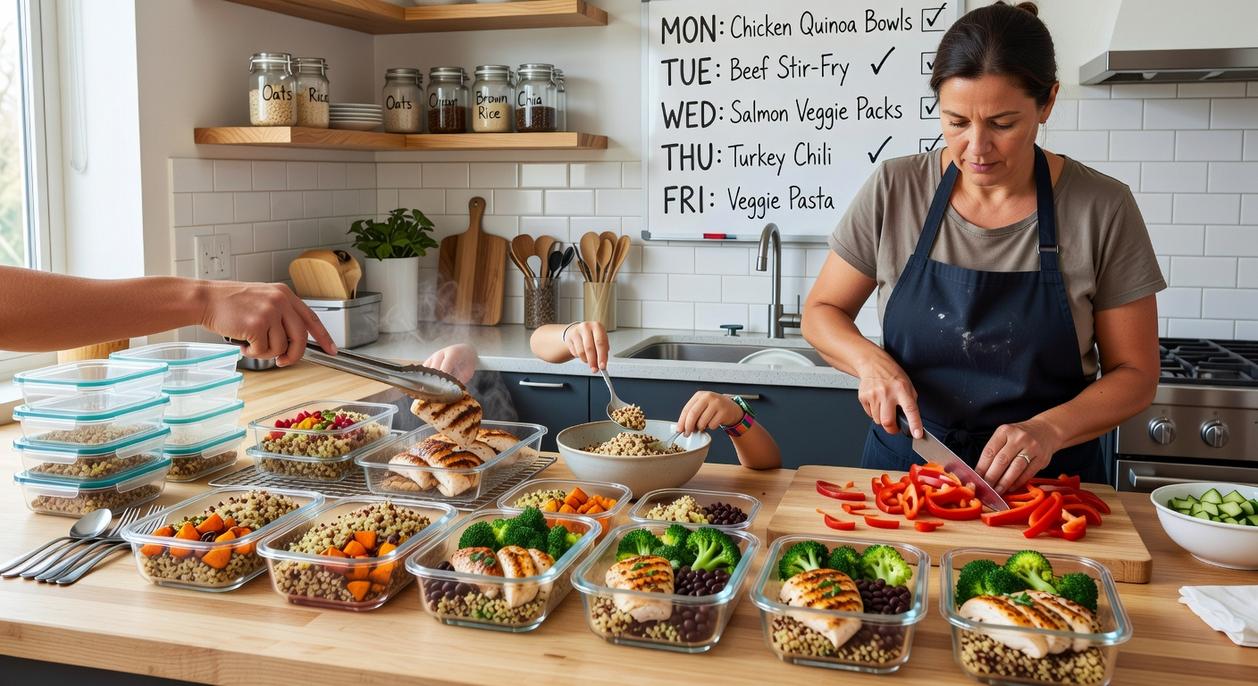
The “Chop Once, Eat Thrice” rule is simple: prep ingredients, not full meals. In other words, instead of cooking three different dinners, you wash and chop onions, celery, carrots, and kale once, then store them in airtight containers. This approach turns weeknight cooking into assembly rather than effort. Toss those veggies into a stir-fry Monday, fold them into an omelet Wednesday, and simmer them into soup Friday. (Your future self will be smug about it.)
Some skeptics argue this leads to boring, repetitive meals. Fair point. However, repetition usually comes from flavor, not structure. That’s where sauces step in. A sharp vinaigrette, creamy yogurt dressing, or bold peanut sauce can completely shift the vibe of the same base ingredients. Think of it like changing the soundtrack in a movie—the scene feels different, even if the setting stays the same.
Meanwhile, marinating proteins ahead of time adds depth without extra work. Place chicken thighs, tofu, or shrimp in freezer bags with spices, citrus, and oil. Cook one portion now and freeze the rest. As it thaws, it absorbs flavor (a culinary two-for-one).
Looking ahead, I suspect this modular style of cooking will dominate busy households. As grocery prices fluctuate and schedules tighten, flexible systems beat rigid meal plans. Use batch cooking strategies to stay ahead without locking yourself into identical leftovers.
For even smoother prep, explore tools that streamline chopping and storage at time saving kitchen tools that actually work. Pro tip: label containers with dates to reduce food waste and maximize freshness.
Your Efficiency Toolkit: Gear and Storage Secrets
Efficiency in the kitchen means removing friction. Choose tools and storage that make food visible and easy to reheat.
Invest in Quality Containers: Clear, glass, stackable containers reduce waste because you see leftovers instantly. Glass reheats safely, and small containers portion sauces.
Embrace Your Appliances: A food processor creates even pieces (so they cook evenly), while slow or pressure cookers handle proteins hands-off. An immersion blender purees soups directly in the pot.
The Power of the Sheet Pan: Use batch cooking strategies for dump-and-bake meals like fajitas or sausage with peppers and onions.
Your Path to Effortless Weekday Meals
You came here looking for a simpler way to handle weekday dinners—and now you have it. With a clear system built on planning, prepping, and smart batch cooking strategies, you’re no longer stuck wondering, “What’s for dinner?” Your fridge holds ready-to-mix components, and your evenings feel lighter and more in control.
The real win isn’t just faster meals—it’s less stress, fewer last-minute decisions, and more nourishing food on your table.
Now take action: this week, batch cook one grain and one protein. See how much time and energy you save. Thousands of home cooks rely on this method—try it yourself and make weeknight chaos a thing of the past.

 Ask Xendris Zolmuth how they got into global flavor inspirations and you'll probably get a longer answer than you expected. The short version: Xendris started doing it, got genuinely hooked, and at some point realized they had accumulated enough hard-won knowledge that it would be a waste not to share it. So they started writing.
What makes Xendris worth reading is that they skips the obvious stuff. Nobody needs another surface-level take on Global Flavor Inspirations, Insightful Reads, Meal Prep Efficiency Hacks. What readers actually want is the nuance — the part that only becomes clear after you've made a few mistakes and figured out why. That's the territory Xendris operates in. The writing is direct, occasionally blunt, and always built around what's actually true rather than what sounds good in an article. They has little patience for filler, which means they's pieces tend to be denser with real information than the average post on the same subject.
Xendris doesn't write to impress anyone. They writes because they has things to say that they genuinely thinks people should hear. That motivation — basic as it sounds — produces something noticeably different from content written for clicks or word count. Readers pick up on it. The comments on Xendris's work tend to reflect that.
Ask Xendris Zolmuth how they got into global flavor inspirations and you'll probably get a longer answer than you expected. The short version: Xendris started doing it, got genuinely hooked, and at some point realized they had accumulated enough hard-won knowledge that it would be a waste not to share it. So they started writing.
What makes Xendris worth reading is that they skips the obvious stuff. Nobody needs another surface-level take on Global Flavor Inspirations, Insightful Reads, Meal Prep Efficiency Hacks. What readers actually want is the nuance — the part that only becomes clear after you've made a few mistakes and figured out why. That's the territory Xendris operates in. The writing is direct, occasionally blunt, and always built around what's actually true rather than what sounds good in an article. They has little patience for filler, which means they's pieces tend to be denser with real information than the average post on the same subject.
Xendris doesn't write to impress anyone. They writes because they has things to say that they genuinely thinks people should hear. That motivation — basic as it sounds — produces something noticeably different from content written for clicks or word count. Readers pick up on it. The comments on Xendris's work tend to reflect that.