
If you’ve ever stared at a recipe and felt like you were decoding a foreign language, you’re not alone. For many, the kitchen feels overwhelming—too many steps, too many tools, and too much room for error. Without a few foundational skills, cooking becomes frustrating, time-consuming, and far too easy to replace with unhealthy takeout. This guide changes that. By breaking down the “why” behind essential basic cooking techniques, you’ll start building real kitchen intuition. Think of this as your clear, practical roadmap to cooking with confidence, creativity, and a lot less stress—one simple skill at a time.
The Chef’s First Tool: Mastering Your Knife
Before fancy gadgets or fire control, there’s the knife. And honestly, I’m not convinced anything improves your cooking faster. Still, some chefs debate whether technique or ingredient quality matters more first—I suspect they rise together.
The Claw and The Bridge
First, The Claw: curl your fingertips inward so your knuckles guide the blade while protecting your fingers. It feels awkward at first (like learning to text with gloves on), but it works. Next, The Bridge: form an arch with your hand to stabilize round items like onions. Together, these grips prioritize safety and control.
The Holy Trinity of Cuts
- Basic dice (onion): Halve, peel, make horizontal and vertical cuts, then slice downward for even cubes.
- Mince (garlic): Crush the clove, remove skin, rock the blade repeatedly until finely chopped.
- Julienne (carrot): Square off sides, slice into planks, stack, then cut into matchsticks.
Why does this matter? Uniform cuts cook evenly—small pieces soften faster, larger ones stay firm. Uneven carrots mean uneven sautéing. Precision supports consistency, one of the most overlooked basic cooking techniques.
If you’re unsure where to start, try zucchini before carrots. Softer vegetables forgive mistakes (and your confidence grows quickly). Pro tip: slow down—speed comes naturally with repetition.
Controlling the Flame: How to Truly Use Your Stove
Most home cooks think stove control is about knobs and numbers. It’s not. It’s about energy transfer—how fast heat moves from flame to pan to food. That’s the part most competitors skip (and it’s why dinner sometimes tastes flat).
Low Heat: For sweating aromatics, melting butter without browning, and gentle simmering.
Medium Heat: The workhorse for sautéing, cooking through proteins, and general-purpose cooking.
High Heat: For searing meat, boiling water, and getting a hard char on vegetables.
Here’s the nuance: low heat builds flavor without color. When you sweat onions, you’re drawing out moisture slowly to unlock natural sugars. Medium heat balances browning and doneness—perfect for weeknight chicken. High heat triggers the Maillard reaction, the chemical browning process that creates deep, savory flavor (Harold McGee, On Food and Cooking).
Counterpoint: some argue high heat does everything faster, so why not crank it? Because TOO MUCH HEAT burns the exterior before the interior cooks. You get bitterness, not complexity.
The Power of the Preheat matters more than most realize. A cold pan causes sticking because proteins bond to metal before a crust forms. Preheating ensures immediate searing instead of steaming.
Pro tip: hold your palm above the pan—if you can’t keep it there for three seconds, it’s ready. Think of it like casting a spell in a fantasy epic: timing is everything.
Unlocking Flavor: The Science of Searing and Sautéing
The Maillard Reaction
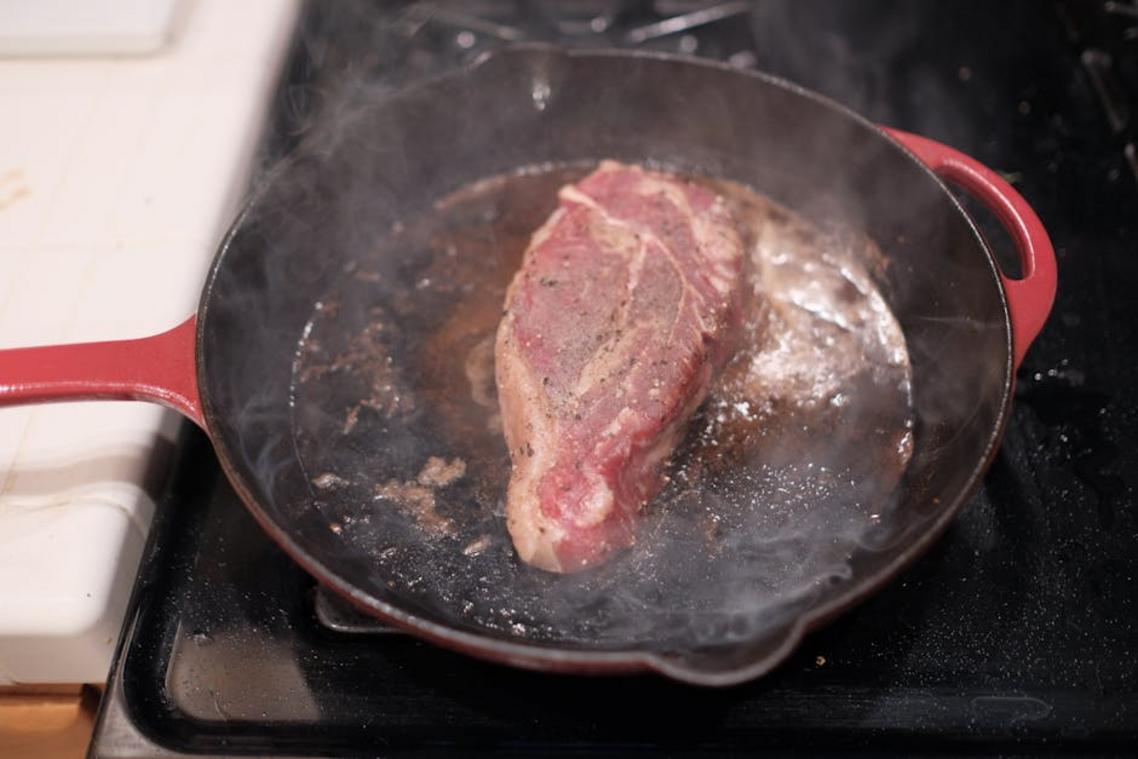
The Maillard Reaction is the chemical browning that happens when heat transforms proteins and sugars into deep, savory flavor. It’s why steak gets a crust and toast turns nutty. Food scientist Harold McGee notes this reaction creates hundreds of flavor compounds (McGee, On Food and Cooking). Some argue browning is just “burning with better PR.” Not quite. Burning is carbonization; Maillard is controlled flavor development (big difference).
The #1 Beginner Mistake
Overcrowding a pan traps moisture, causing food to steam instead of sear. Steam forms at 212°F, while browning needs higher dry heat. Cook in batches to keep space between pieces (yes, patience pays).
| Crowded Pan | Proper Sear |
|————-|————-|
| Steams food | Browns food |
| Pale color | Golden crust |
| Weak flavor | Deep savoriness |
Fat Is Your Friend
Oil or butter conducts heat evenly and prevents sticking. Despite low-fat trends, a thin layer of fat improves contact with the pan. (Pro tip: shimmer, not smoke.)
Practical Application
Pat chicken thighs dry. Season. Heat oil until shimmering. Place skin-side down without moving for 5–7 minutes. Flip once. For mushrooms, spread evenly and resist stirring too soon. Mastering these basic cooking techniques builds confidence—and pairs beautifully with understanding whole foods a beginners guide to clean eating. (Think of it as your culinary glow-up arc.)
Seasoning Like You Mean It: Building Flavor at Every Step
Great cooking isn’t magic—it’s momentum. And salt is where that momentum begins. Salt doesn’t just make food salty; it enhances flavor by amplifying existing taste compounds (Harold McGee, On Food and Cooking). Season meats early so it can penetrate and tenderize. Add it later for mushrooms to prevent excess moisture loss during sautéing. I’ll admit, there’s debate about exact timing, and honestly, it sometimes depends on the pan, the heat, and the mood.
• Layering flavors starts with aromatics—onion, garlic—gently sautéing until fragrant. Then come spices, which bloom in oil to release fat-soluble compounds. Finish with fresh herbs for brightness. Think of it like building a playlist: base rhythm first, high notes at the end (yes, even Beyoncé knows pacing matters).
• Acidity is the closer. A squeeze of lemon or splash of vinegar can brighten a dish by balancing fat and salt (Salt, Fat, Acid, Heat by Samin Nosrat). Not always necessary—but when it works, it sings.
• Taste as you go. Non-negotiable. Palates differ, ingredients vary, and certainty in cooking is rare. Adjust, pause, taste again. That’s the real skill.
Simple Sauces, Big Impact
Back in 2020, when everyone suddenly cooked three meals a day, many home cooks learned a powerful truth: flavor doesn’t require complexity. Sometimes it just takes five minutes.
The 5-Minute Pan Sauce
After you sear chicken, steak, or fish, don’t wash the pan (those browned bits are called fond—caramelized proteins packed with flavor). Instead: 1. Remove protein, 2. Sauté shallot/garlic, 3. Deglaze with wine/stock, 4. Reduce, 5. Swirl in butter. Deglazing simply means adding liquid to loosen those flavorful bits. As the liquid reduces—meaning it simmers until slightly thickened—it concentrates flavor. Finish with cold butter for gloss and body (yes, it feels fancy; no, it’s not complicated).
Some argue pan sauces are unnecessary—“Just use bottled sauce.” Fair. But bottled sauces rarely capture the exact flavor left in your pan. That’s personalization you can’t buy.
The Perfect Vinaigrette
Start with a 3:1 ratio: three parts oil to one part vinegar. From there, add mustard for emulsification (binding oil and vinegar), honey for balance, or fresh herbs for brightness. Shake in a jar and adjust. Pro tip: let it sit five minutes before tasting again.
Ultimately, when you Use basic cooking techniques, even roasted chicken or plain greens feel intentional—like the difference between a demo track and the final album release.
Your Kitchen Adventure Awaits
You’ve explored the foundations that truly unlock your potential in the kitchen: knife work, heat control, searing, seasoning, and sauce making. These five skills turn simple ingredients into memorable meals and give you confidence at the stove. Remember, cooking is a practice—not a performance. Mistakes aren’t failures; they’re feedback that helps you improve.
This week, choose one recipe and focus on mastering just one of these skills. Notice the difference it makes.
With every meal you create, you build skill, confidence, and the simple joy that comes from making something nourishing with your own hands.

 Ask Xendris Zolmuth how they got into global flavor inspirations and you'll probably get a longer answer than you expected. The short version: Xendris started doing it, got genuinely hooked, and at some point realized they had accumulated enough hard-won knowledge that it would be a waste not to share it. So they started writing.
What makes Xendris worth reading is that they skips the obvious stuff. Nobody needs another surface-level take on Global Flavor Inspirations, Insightful Reads, Meal Prep Efficiency Hacks. What readers actually want is the nuance — the part that only becomes clear after you've made a few mistakes and figured out why. That's the territory Xendris operates in. The writing is direct, occasionally blunt, and always built around what's actually true rather than what sounds good in an article. They has little patience for filler, which means they's pieces tend to be denser with real information than the average post on the same subject.
Xendris doesn't write to impress anyone. They writes because they has things to say that they genuinely thinks people should hear. That motivation — basic as it sounds — produces something noticeably different from content written for clicks or word count. Readers pick up on it. The comments on Xendris's work tend to reflect that.
Ask Xendris Zolmuth how they got into global flavor inspirations and you'll probably get a longer answer than you expected. The short version: Xendris started doing it, got genuinely hooked, and at some point realized they had accumulated enough hard-won knowledge that it would be a waste not to share it. So they started writing.
What makes Xendris worth reading is that they skips the obvious stuff. Nobody needs another surface-level take on Global Flavor Inspirations, Insightful Reads, Meal Prep Efficiency Hacks. What readers actually want is the nuance — the part that only becomes clear after you've made a few mistakes and figured out why. That's the territory Xendris operates in. The writing is direct, occasionally blunt, and always built around what's actually true rather than what sounds good in an article. They has little patience for filler, which means they's pieces tend to be denser with real information than the average post on the same subject.
Xendris doesn't write to impress anyone. They writes because they has things to say that they genuinely thinks people should hear. That motivation — basic as it sounds — produces something noticeably different from content written for clicks or word count. Readers pick up on it. The comments on Xendris's work tend to reflect that.