

If you’re searching for a practical way to eat well without spending hours in the kitchen every day, this guide is built for you. A smart weekly meal prep plan isn’t just about cooking in bulk—it’s about creating balanced, flavorful meals that save time, reduce waste, and make healthy choices effortless all week long.
In this article, you’ll find clear strategies for building wholesome foundations, pairing ingredients for both nutrition and taste, and incorporating global flavor inspirations to keep your menu exciting. We break down efficient prep methods, smart storage tips, and simple ways to transform core components into multiple satisfying dishes.
Our approach is grounded in culinary technique, nutrition-forward thinking, and practical kitchen efficiency—designed to work in real homes with real schedules. By the end, you’ll have a streamlined system you can rely on, turning meal prep from a chore into a sustainable, heartful routine.
Your Blueprint for a Week of Effortless, Healthy Eating
Ever open the fridge at 6 p.m. and think, “What am I even making tonight?” Sound familiar? This guide gives you a step-by-step schedule to prep a full week of meals in just a few hours. Instead of random leftovers, you’ll use a component-based system—meaning you prepare versatile building blocks like grains, proteins, and sauces that mix and match all week. As a result, food stays fresh (and far from boring).
So why does this weekly meal prep plan work? Because it eliminates decision fatigue—the mental drain of constant choices—while cutting takeout temptation and food waste. Ready to reclaim your evenings?
The “Why” Behind the Schedule: More Than Just Saving Time
Most people think meal prep is about efficiency. It is—but that’s the least interesting benefit.
Nutritional Control means deciding exactly what goes into your body. When you cook ahead, you control ingredients, portion sizes, and macronutrients (proteins, fats, and carbohydrates your body needs in large amounts). No hidden sugars. No “mystery oils.” Restaurants often add more salt and fat than you’d use at home (CDC reports most sodium comes from packaged and restaurant foods). That control is power.
Reduced Decision Fatigue is the underrated win. Decision fatigue is the mental drain from repeated choices. Studies show we make thousands of decisions daily (APA). Why waste brainpower on lunch? A weekly meal prep plan removes that friction (and the 6 p.m. “What’s for dinner?” spiral).
Financial Benefits are obvious—but here’s the contrarian take: it’s not just savings, it’s constraint. A schedule acts like a food budget with teeth.
Minimizing Food Waste turns intention into action. Every ingredient has a job—no wilted spinach guilt.
The 3-Step Weekend Prep Framework (2 Hours to Freedom)
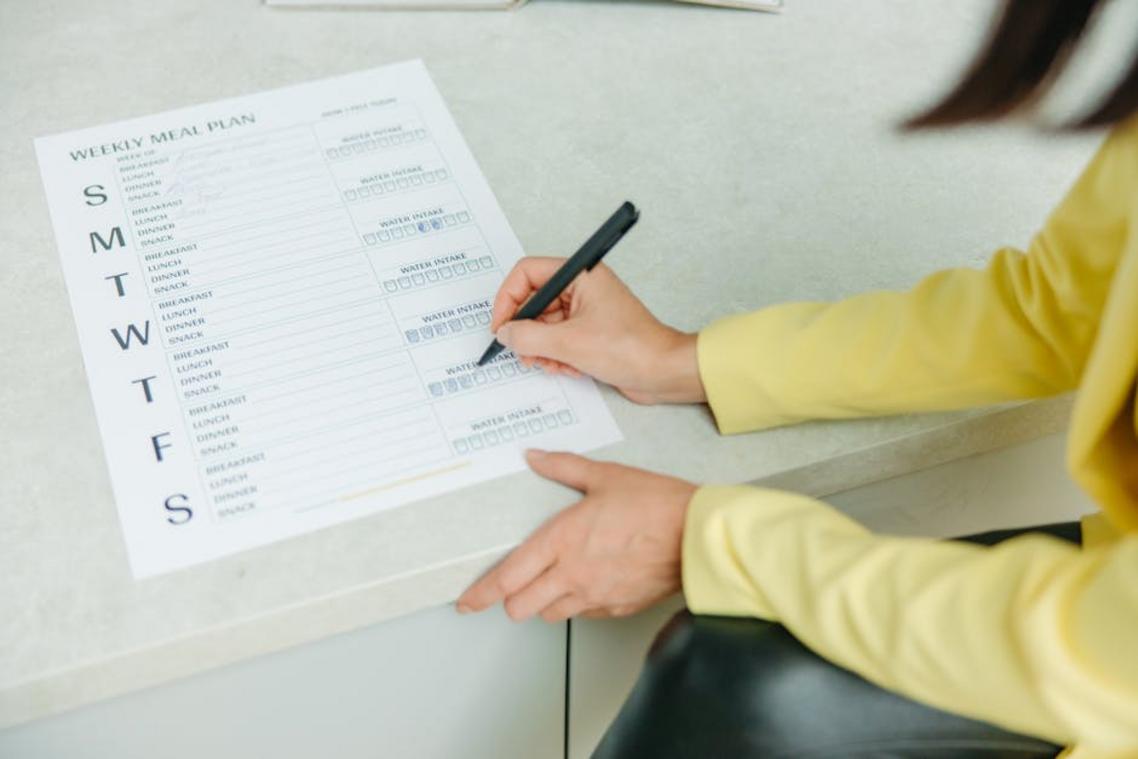
If your Sunday night feels like a cooking marathon (with fewer medals and more dishes), this framework flips the script. In just two hours, you’ll build a flexible system that makes weekday meals almost automatic.
Step 1: The 15-Minute Plan & Shop
Start with a master ingredient list—a short, strategic list of versatile components you can mix and match all week. Think grains, proteins, vegetables, and sauces that play well together.
Action step: Choose a weekly flavor theme like Tex-Mex or Mediterranean. This reduces decision fatigue (a real psychological phenomenon where too many choices drain willpower, per APA research) and simplifies your cart. For example, a Mediterranean theme might include quinoa, chickpeas, cucumbers, cherry tomatoes, feta, and lemon-tahini dressing.
Pro tip: Screenshot your list so you’re not wandering the aisles wondering why you’re there.
Step 2: The 90-Minute “Component Cook”
Instead of cooking full meals, prepare building blocks:
- Batch Cook Grains: Quinoa, brown rice, or farro. Cook once, use all week.
- Roast & Chop Vegetables: Roast root veggies (carrots, sweet potatoes) and store chopped greens separately.
- Prepare Proteins: Grill chicken breasts, bake salmon, or simmer lentils.
- Mix Dressings & Sauces: One vinaigrette, one bold sauce (like chimichurri).
This modular method mirrors restaurant mise en place—a French term meaning “everything in its place.” It’s the backbone of any effective weekly meal prep plan.
If you want deeper guidance, explore these batch cooking strategies for busy professionals: https://heartumental.com.co/batch-cooking-strategies-for-busy-professionals/
Step 3: The 15-Minute “Store & Systemize”
Use glass containers (they resist stains and odors better than plastic, per USDA food storage guidelines). Keep sauces separate to prevent sogginess. Label with dates for grab-and-go clarity.
Future you will be grateful (and significantly less stressed).
Sample 5-Day Healthy Meal Prep Schedule & Menu
If you’ve ever wondered what a weekly meal prep plan actually looks like in practice, here’s a concrete example built around a Mediterranean flavor theme. Mediterranean eating—defined by its emphasis on olive oil, vegetables, whole grains, legumes, and lean proteins—has been linked to improved heart health and longevity (Harvard T.H. Chan School of Public Health).
Sunday Component Prep List
- Grains: 2 cups of dry quinoa, cooked.
- Veggies: Roast 1 head of broccoli, 1 red onion, and 2 bell peppers. Finely chop 1 cucumber and 1 pint of cherry tomatoes.
- Protein: Grill 4 chicken breasts, seasoned with lemon and oregano. Cook 1 can of chickpeas.
- Sauce: Whisk together a lemon-tahini dressing.
At first glance, critics might say this sounds repetitive. “Won’t I get bored eating the same ingredients all week?” Fair question. However, variety doesn’t require starting from scratch daily. By recombining core components, you create different textures and flavor balances (and save serious time).
Daily Assembly Guide
- Monday Lunch: Power Bowl – Quinoa base, sliced chicken, roasted veggies, and a drizzle of tahini dressing.
- Tuesday Lunch: Mediterranean Salad – Mixed greens, chopped cucumber/tomato, chickpeas, sliced chicken, and tahini dressing.
- Wednesday Lunch: Quinoa Tabbouleh – Quinoa mixed with chopped fresh parsley, cucumber, tomato, and chickpeas.
- Thursday Lunch: Repeat of Monday’s Power Bowl.
- Friday Lunch: Chicken & Veggie Wrap – Sliced chicken and fresh veggies in a whole-wheat tortilla with a smear of hummus (store-bought for efficiency).
Notably, this approach reflects a broader shift experts predict will continue: modular cooking. In other words, prepping adaptable building blocks instead of rigid recipes. As busy schedules intensify, it’s reasonable to speculate that flexible, globally inspired prep systems will replace traditional “one-recipe-per-day” models.
Pro tip: Keep sauces separate until serving to preserve texture (no one likes soggy greens by Wednesday).
Hacks for Keeping Prepped Meals Delicious and Fresh
Most meal prep advice stops at storage containers. That’s surface-level. Real freshness is about structure.
The “Don’t Dress” Rule. Store salads and bowls undressed. Acid breaks down greens fast (that sad desk lunch look). Add dressing right before eating to preserve crunch.
The “Layer Your Jar” Trick. Dressing on the bottom, then hard veggies, grains, protein, leafy greens on top. Gravity works in your favor—shake when ready.
Reheat with Care. Warm proteins in a pan with a splash of water and lid. Steam revives texture.
Last-Minute Flavor Boosts. A squeeze of lemon, herbs, or feta transforms your weekly meal prep plan.
Pro tip: Keep fresh garnishes separate until serving.
Your week doesn’t have to unravel at 5 PM. Instead, reclaim it with a simple system designed for real life. This weekly meal prep plan works because it blends structure with choice—component cooking (prepping versatile building blocks like grains, proteins, and sauces) lets you mix flavors without starting from scratch.
Here’s how to lock it in:
- Choose a flavor theme (Mediterranean, Tex-Mex, or cozy comfort).
- Build your grocery list around core staples.
- Block two focused hours this weekend.
As a result, dinners feel intentional, lunches stay satisfying, and nothing tastes bland. Structure frees creativity (yes, really).
You came here looking for a way to make healthy eating simpler, more flavorful, and less stressful. Now you have the foundations to build balanced plates, explore global flavors with confidence, and pair ingredients in ways that nourish both body and mood.
The real pain point was never just “what do I cook?” It was the daily pressure of time, decision fatigue, and wanting meals that feel satisfying without derailing your goals. With the right structure and smart prep strategies, that pressure disappears.
This is your moment to turn inspiration into action. Start by mapping out your weekly meal prep plan using the flavor pairings and efficiency hacks you’ve learned. Choose a few core ingredients, batch-cook with intention, and build flexible meals that carry you through the week.
If you’re ready to stop scrambling at 6 p.m. and start feeling confident in your kitchen, take the next step now. Put your weekly meal prep plan on paper, stock your essentials, and commit to one organized prep session this week. Thousands of home cooks are transforming chaotic evenings into calm, nourishing routines — and you can too. Start today and make every meal count.

 Ask Xendris Zolmuth how they got into global flavor inspirations and you'll probably get a longer answer than you expected. The short version: Xendris started doing it, got genuinely hooked, and at some point realized they had accumulated enough hard-won knowledge that it would be a waste not to share it. So they started writing.
What makes Xendris worth reading is that they skips the obvious stuff. Nobody needs another surface-level take on Global Flavor Inspirations, Insightful Reads, Meal Prep Efficiency Hacks. What readers actually want is the nuance — the part that only becomes clear after you've made a few mistakes and figured out why. That's the territory Xendris operates in. The writing is direct, occasionally blunt, and always built around what's actually true rather than what sounds good in an article. They has little patience for filler, which means they's pieces tend to be denser with real information than the average post on the same subject.
Xendris doesn't write to impress anyone. They writes because they has things to say that they genuinely thinks people should hear. That motivation — basic as it sounds — produces something noticeably different from content written for clicks or word count. Readers pick up on it. The comments on Xendris's work tend to reflect that.
Ask Xendris Zolmuth how they got into global flavor inspirations and you'll probably get a longer answer than you expected. The short version: Xendris started doing it, got genuinely hooked, and at some point realized they had accumulated enough hard-won knowledge that it would be a waste not to share it. So they started writing.
What makes Xendris worth reading is that they skips the obvious stuff. Nobody needs another surface-level take on Global Flavor Inspirations, Insightful Reads, Meal Prep Efficiency Hacks. What readers actually want is the nuance — the part that only becomes clear after you've made a few mistakes and figured out why. That's the territory Xendris operates in. The writing is direct, occasionally blunt, and always built around what's actually true rather than what sounds good in an article. They has little patience for filler, which means they's pieces tend to be denser with real information than the average post on the same subject.
Xendris doesn't write to impress anyone. They writes because they has things to say that they genuinely thinks people should hear. That motivation — basic as it sounds — produces something noticeably different from content written for clicks or word count. Readers pick up on it. The comments on Xendris's work tend to reflect that.