
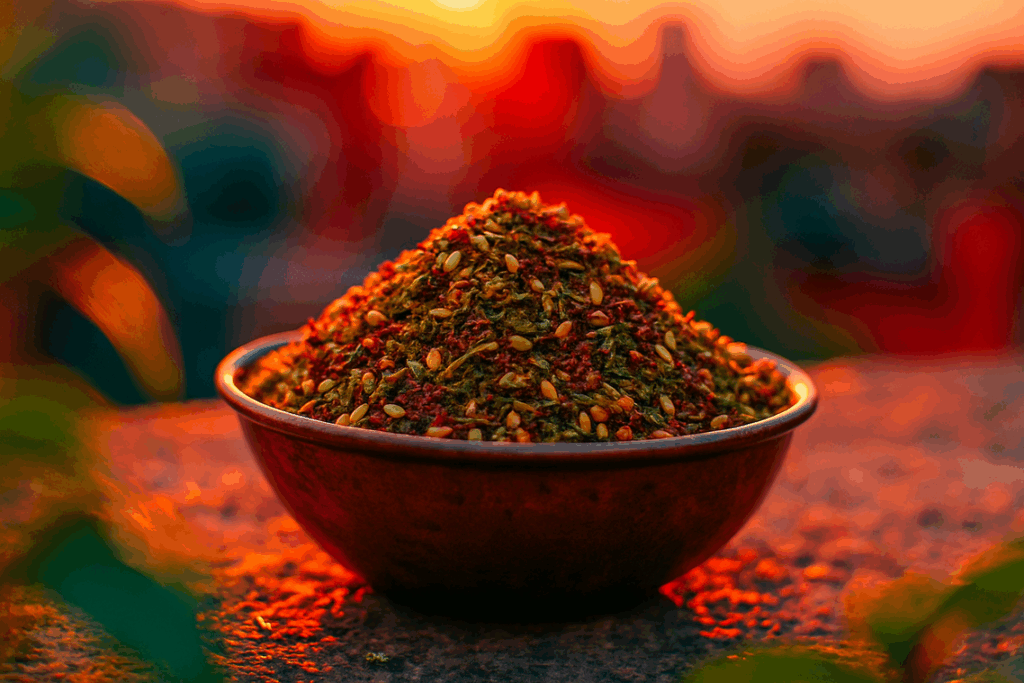
Za’atar: The Herbaceous, Tangy All-Star
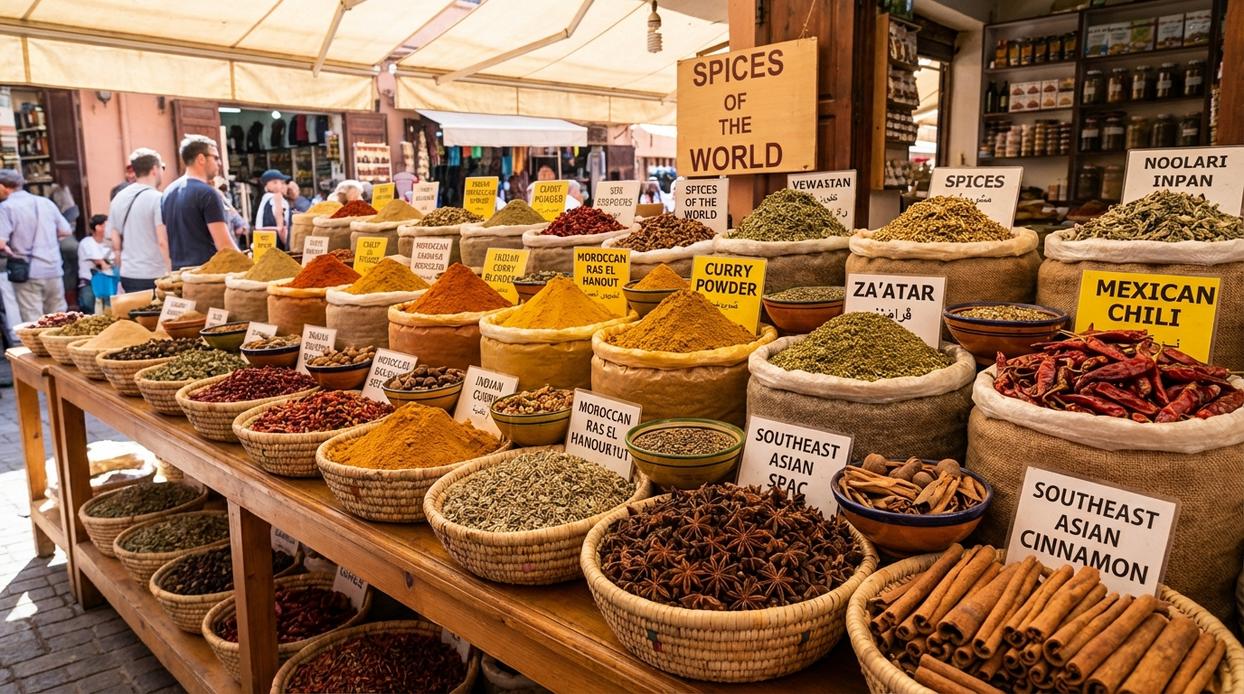
If you line up middle eastern spice blends side by side, some lean smoky (like baharat), others warm and earthy (like ras el hanout). Za’atar, by contrast, is bright, herbal, and sharp in the best way. It wakes food up rather than weighing it down.
At its core, za’atar is a trio: dried thyme (or hyssop) for woodsy depth, toasted sesame seeds for nutty crunch, and sumac, a deep red spice made from dried berries that delivers a lemony tang (without the juice). Sumac is what gives za’atar its signature sparkle—think of it as nature’s citrus dust.
Flavor-wise, it’s a balance game: nutty vs tangy, earthy vs fresh. Compared to a salt-heavy seasoning blend, za’atar feels lighter and more layered (and yes, more interesting).
Practical uses:
- Mixed with olive oil for dipping warm bread
- Sprinkled over labneh, hummus, or salads
- Used as a rub for chicken, fish, or roasted vegetables
Meal Prep Efficiency Hack: Whisk za’atar with fresh lemon juice, olive oil, and a pinch of salt for a vinaigrette you can batch once and drizzle over grain bowls or greens all week. Pro tip: Let it sit 30 minutes before using—the herbs bloom and the flavor deepens.
The aromas of the Middle East have a way of turning ordinary meals into unforgettable experiences.
Now you have a foundational understanding of the key Middle Eastern spice blends that make this cuisine so vibrant. What once felt intimidating—sprinkling unfamiliar spices into your cooking—no longer has to hold you back.
By getting to know the core flavors and everyday uses of Middle Eastern spice blends like Za’atar, Baharat, and Ras el Hanout, you unlock a new level of confidence in your kitchen. These blends aren’t complicated—they’re balanced, layered, and surprisingly versatile. A pinch can elevate roasted vegetables, grilled meats, rice dishes, or even a simple flatbread.
You came here curious about bold, global flavors. Now you’re ready to use them.
Bring the Flavors Home This Week
Don’t let uncertainty keep your meals bland. Choose one of these Middle Eastern spice blends this week, find a simple recipe, and try it. A small step can completely transform your cooking routine.
Thousands of home cooks are already discovering how global flavors make everyday meals exciting again. Pick your blend, start cooking, and taste the difference for yourself tonight.

 Ask Teresa Valdezitara how they got into meal prep efficiency hacks and you'll probably get a longer answer than you expected. The short version: Teresa started doing it, got genuinely hooked, and at some point realized they had accumulated enough hard-won knowledge that it would be a waste not to share it. So they started writing.
What makes Teresa worth reading is that they skips the obvious stuff. Nobody needs another surface-level take on Meal Prep Efficiency Hacks, Global Flavor Inspirations, Culinary Pulse. What readers actually want is the nuance — the part that only becomes clear after you've made a few mistakes and figured out why. That's the territory Teresa operates in. The writing is direct, occasionally blunt, and always built around what's actually true rather than what sounds good in an article. They has little patience for filler, which means they's pieces tend to be denser with real information than the average post on the same subject.
Teresa doesn't write to impress anyone. They writes because they has things to say that they genuinely thinks people should hear. That motivation — basic as it sounds — produces something noticeably different from content written for clicks or word count. Readers pick up on it. The comments on Teresa's work tend to reflect that.
Ask Teresa Valdezitara how they got into meal prep efficiency hacks and you'll probably get a longer answer than you expected. The short version: Teresa started doing it, got genuinely hooked, and at some point realized they had accumulated enough hard-won knowledge that it would be a waste not to share it. So they started writing.
What makes Teresa worth reading is that they skips the obvious stuff. Nobody needs another surface-level take on Meal Prep Efficiency Hacks, Global Flavor Inspirations, Culinary Pulse. What readers actually want is the nuance — the part that only becomes clear after you've made a few mistakes and figured out why. That's the territory Teresa operates in. The writing is direct, occasionally blunt, and always built around what's actually true rather than what sounds good in an article. They has little patience for filler, which means they's pieces tend to be denser with real information than the average post on the same subject.
Teresa doesn't write to impress anyone. They writes because they has things to say that they genuinely thinks people should hear. That motivation — basic as it sounds — produces something noticeably different from content written for clicks or word count. Readers pick up on it. The comments on Teresa's work tend to reflect that.