
The vibrant, complex, and deeply satisfying flavors of East Asian cuisine can feel intimidating to recreate at home. With so many sauces, pastes, and spices lining store shelves, it’s hard to know where to begin or which ingredients truly matter. This East Asian seasonings guide cuts through the confusion by focusing on the foundational flavors behind Chinese, Japanese, and Korean cooking. You’ll discover what each essential ingredient tastes like, how it’s traditionally used, and how to combine them for authentic, balanced dishes. Rooted in global flavor insights and practical kitchen experience, this guide is your clear path to cooking with confidence.
The Cornerstones of Chinese Flavor
Once you’ve mastered the basics of East Asian seasonings, you can elevate simple ingredients into unforgettable quick snacks, perfect for those looking to experiment in the kitchen—just check out our article on Quick Snacks Fhthgoodfood for some delicious ideas!
Chinese cooking is built on balance—what’s often called xian (savory depth). At the heart of that balance are four powerhouse seasonings. Some argue you can substitute freely or skip one altogether. Technically true. But if you’ve ever wondered why your stir-fry tastes “almost right” (but not quite takeout-level), this is why.
The Essential Four—and How to Use Them
| Seasoning | What It Does | How to Use It Practically |
|---|---|---|
| Light Soy Sauce | Salty, savory backbone |
Add 1–2 teaspoons during cooking for seasoning |
| Dark Soy Sauce | Color and subtle sweetness | Use ½–1 teaspoon in braises for rich mahogany color |
| Shaoxing Wine | Aroma, tenderizes, removes gaminess | Splash 1 tablespoon into marinades or deglaze hot pans |
| Oyster Sauce | Thick, sweet-savory umami | Stir 1 tablespoon into vegetable stir-fries |
| Five-Spice Powder | Aromatic balance | Use a pinch in rubs or slow-cooked meats |
First, soy sauce. Light soy seasons; dark soy colors. They’re not interchangeable (despite what hurried weeknight cooking might suggest). Next, Shaoxing wine adds complexity—similar to how wine elevates French sauces. If unavailable, dry sherry works in a pinch.
Then comes oyster sauce. Despite the name, it’s not fishy. It delivers concentrated umami (a savory taste identified by Kikunae Ikeda in 1908). Toss it with blanched broccoli and garlic for a fast side.
Finally, five-spice powder embodies balance—sweet, sour, bitter, pungent, salty. Use sparingly. Think accent, not spotlight (like background music in a great film).
For a quick weeknight bowl: marinate sliced chicken with light soy and Shaoxing wine, stir-fry, add vegetables, finish with oyster sauce, and a whisper of five-spice.
Pro tip: Heat oil before adding Shaoxing wine to “bloom” aroma.
For deeper pantry context, consult an East Asian seasonings guide and experiment confidently.
The Soul of Japanese Umami
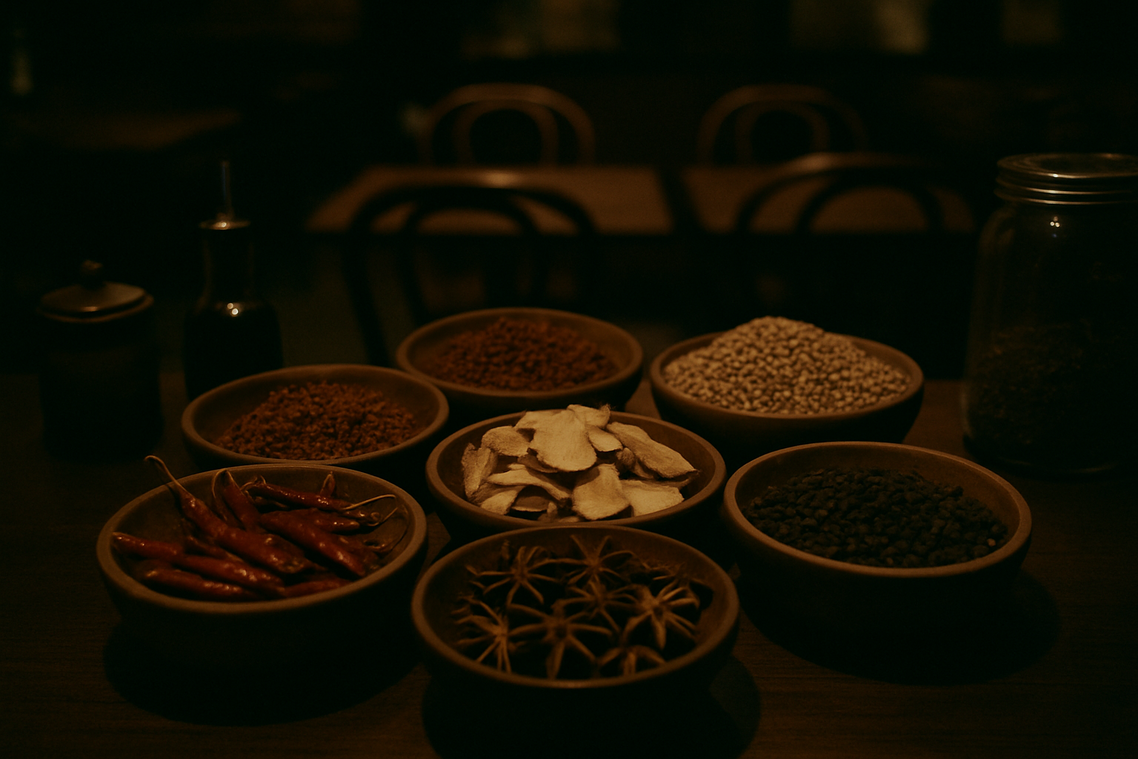
Japanese cuisine is built on clarity and depth. At its heart is umami—often called the “fifth taste”—a savory richness first identified by chemist Kikunae Ikeda in 1908 (Journal of the Chemical Society of Tokyo). Umami isn’t salty or sweet; it’s the mouth-filling savoriness you taste in aged cheese, mushrooms, or a perfectly simmered broth (the kind that makes you pause mid-bite).
The Core Four: What You Should Always Have
If you’re stocking a kitchen with intention, start here:
- Shoyu (醤油): A soy sauce brewed with soybeans and wheat, giving it balanced salinity and subtle sweetness. Choose naturally brewed shoyu for dipping sushi or seasoning stir-fries.
- Mirin (みりん): A sweet rice wine that adds gloss and gentle sweetness. Use it to round out sauces or create that classic teriyaki sheen.
- Miso (味噌): A fermented soybean paste. White miso is mild and slightly sweet—ideal for dressings. Red miso is bolder and saltier—perfect for braises.
- Dashi (だし): A stock traditionally made from kombu (dried kelp) and bonito flakes. It’s subtle, yet transformative.
Some argue these ingredients are too delicate for bold palates. But restraint is the point. Layering shoyu over dashi with a touch of mirin creates harmony, not noise (think minimalist design, but edible).
Recommendation: Start simple. Make a basic miso soup with dashi, white miso, and scallions. Taste before adding anything else. Train your palate to notice nuance.
For a broader context, explore this East Asian seasonings guide, then compare with flavors from latin american spices that transform simple dishes to understand how cultures build depth differently.
Master these four, and you master the soul of Japanese umami.
The Bold and Pungent Heart of Korea
Korean cuisine doesn’t whisper. It SINGS. Loudly. Boldly. Sometimes with a little funk.
At the center of that chorus is a trio—plus a few supporting players—that act like the rhythm section of a band. Without them, the melody falls flat. With them, every dish hums with depth.
The Flavor Architects
Think of these ingredients as primary colors. Alone, they’re striking. Together, they create an entire spectrum.
-
Gochujang (고추장): A thick, crimson paste made from chili powder, glutinous rice, fermented soybeans, and salt. Fermentation (a natural process where microbes break down sugars and proteins to create deeper flavors) gives it complexity. It’s spicy, savory, and slightly sweet—like barbecue sauce with a PhD. It fuels dishes like tteokbokki and marinades for bulgogi, clinging to ingredients the way caramel coats popcorn.
-
Doenjang (된장): A fermented soybean paste similar to miso but funkier and saltier. If miso is a polite handshake, doenjang is a bear hug. It anchors doenjang-jjigae and doubles as a vegetable dip, delivering umami (that savory “fifth taste”) in waves.
-
Gochugaru (고춧가루): Korean chili flakes with a smoky, subtly sweet profile. Heat, yes—but balanced heat. Essential for kimchi, it’s the difference between a campfire glow and a five-alarm blaze.
-
Guk-Ganjang (국간장): Soup soy sauce. Saltier and more fermented than regular soy sauce, it seasons broths without turning them murky. Think of it as invisible ink for flavor.
-
Toasted Sesame Oil (참기름, chamgireum): A finishing oil. A few drops at the end release a nutty aroma that rises like the final note in a ballad (pro tip: never cook it at high heat; it’s a perfume, not frying oil).
Some argue Korean food is “too strong.” But that intensity is intentional. Like a well-produced K-drama, every element is heightened for impact.
For deeper pantry context, consult the East Asian seasonings guide—and notice how Korea’s staples stand unapologetically bold.
Building Your Foundational Pantry
You came here looking for clarity, not a cluttered cabinet full of confusing ingredients. Now you understand that just a handful of essentials can open the door to authentic, balanced flavors without overwhelm. That’s the power of a strong foundation.
If you’ve ever felt stuck staring at a recipe packed with unfamiliar items, that frustration ends here. Start with light soy sauce, toasted sesame oil, and gochujang, and build from there with confidence.
For a deeper dive, explore our East Asian seasonings guide and simplify your pantry the smart way. Discover the proven system thousands of home cooks rely on—then stock up and start cooking today.

 There is a specific skill involved in explaining something clearly — one that is completely separate from actually knowing the subject. Robert Venableroso has both. They has spent years working with global flavor inspirations in a hands-on capacity, and an equal amount of time figuring out how to translate that experience into writing that people with different backgrounds can actually absorb and use.
Robert tends to approach complex subjects — Global Flavor Inspirations, Culinary Pulse, Heartful Ingredient Pairings being good examples — by starting with what the reader already knows, then building outward from there rather than dropping them in the deep end. It sounds like a small thing. In practice it makes a significant difference in whether someone finishes the article or abandons it halfway through. They is also good at knowing when to stop — a surprisingly underrated skill. Some writers bury useful information under so many caveats and qualifications that the point disappears. Robert knows where the point is and gets there without too many detours.
The practical effect of all this is that people who read Robert's work tend to come away actually capable of doing something with it. Not just vaguely informed — actually capable. For a writer working in global flavor inspirations, that is probably the best possible outcome, and it's the standard Robert holds they's own work to.
There is a specific skill involved in explaining something clearly — one that is completely separate from actually knowing the subject. Robert Venableroso has both. They has spent years working with global flavor inspirations in a hands-on capacity, and an equal amount of time figuring out how to translate that experience into writing that people with different backgrounds can actually absorb and use.
Robert tends to approach complex subjects — Global Flavor Inspirations, Culinary Pulse, Heartful Ingredient Pairings being good examples — by starting with what the reader already knows, then building outward from there rather than dropping them in the deep end. It sounds like a small thing. In practice it makes a significant difference in whether someone finishes the article or abandons it halfway through. They is also good at knowing when to stop — a surprisingly underrated skill. Some writers bury useful information under so many caveats and qualifications that the point disappears. Robert knows where the point is and gets there without too many detours.
The practical effect of all this is that people who read Robert's work tend to come away actually capable of doing something with it. Not just vaguely informed — actually capable. For a writer working in global flavor inspirations, that is probably the best possible outcome, and it's the standard Robert holds they's own work to.