

If you’re searching for a way to make cooking feel more intuitive, nourishing, and aligned with your mental wellbeing, you’re in the right place. Many people want meals that do more than satisfy hunger—they want food that fuels focus, balances mood, and brings genuine enjoyment back to the kitchen. The challenge is knowing which ingredients, techniques, and flavor combinations actually make a difference.
This article delivers practical culinary pulse insights, wholesome foundations, and globally inspired pairings designed to elevate both your plate and your mindset. You’ll discover efficient meal prep strategies, thoughtful ingredient combinations, and simple upgrades that transform everyday dishes into heartful, restorative experiences.
Our guidance draws from evidence-informed nutrition principles, time-tested culinary techniques, and cross-cultural food wisdom—blending science with real-world practicality. By the end, you’ll have clear, actionable ideas to create meals that support energy, clarity, and joy—without overcomplicating your routine.
Your kitchen doesn’t have to feel like a battleground at 6 p.m. It can become a reset button for your nervous system. Start with sensory anchoring: notice the sizzle of garlic, the citrus scent on your fingers, the rhythm of chopping. This is mindfulness—paying deliberate attention to the present moment without judgment, a practice shown to reduce stress and rumination (APA). Try:
- Prep vegetables slowly, matching breaths to knife strokes.
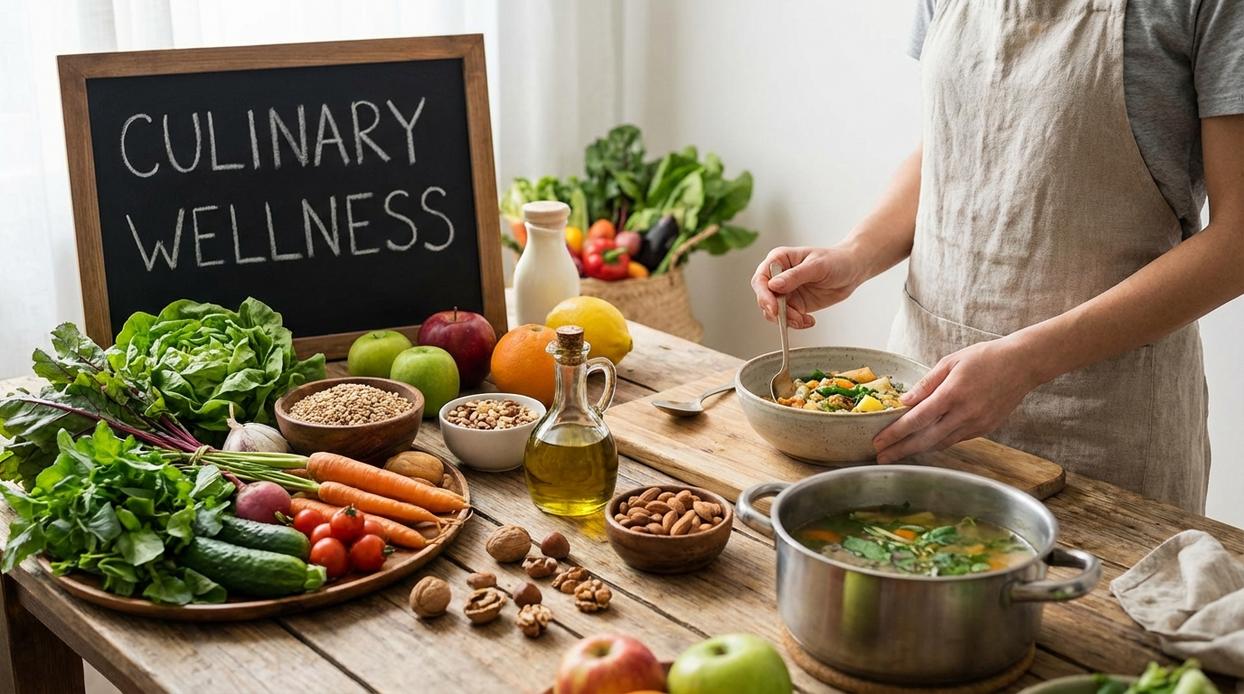
- Simmer a simple soup, tasting and adjusting salt with curiosity.
When you treat cooking and mental wellbeing as partners, even Tuesday dinner feels meditative, not chaotic anymore.
The Mindful Foundation: Setting Your Stage for Serenity
Cooking at home not only allows for a creative outlet that can boost mood, but it also presents an opportunity to incorporate the nutritional wisdom found in our article ‘Nutritional Advice Fhthgoodfood,’ ultimately enhancing both physical and mental wellbeing.
The French call it mise en place—literally, “everything in its place.” In professional kitchens, it means washing, chopping, and arranging ingredients before the heat ever turns on. At home, it can become a quiet form of meditation. Try this: rinse your vegetables slowly, line up your spices in small bowls, stack your tools neatly. Notice how your breathing steadies as the chaos disappears. Order creates predictability, and predictability calms an anxious mind (your brain loves knowing what comes next).
Next, build what I call sensory scaffolding. Dim the lights. Put on instrumental music. Clear the countertops until only what you need remains. This isn’t cleaning—it’s a ritual. You’re signaling that this moment is reserved for cooking and mental wellbeing. Even lighting a candle before you begin can act as a mental “on switch.”
Finally, practice the power of a single task. When chopping, just chop. Feel the knife’s rhythm. When stirring, just stir. If your thoughts wander to emails or errands, gently return to the motion in front of you. Single-tasking reduces cognitive overload (multitasking is a myth, according to APA research). One step. One breath. One calm, steady kitchen.
Finding Flow in Rhythm and Repetition
There’s a reason chefs say the kitchen has its own tempo. When you lean into that rhythm, everyday tasks become restorative rituals.
The Rhythmic Chop
First, focus on your knife work. The steady up-and-down motion of chopping vegetables can act as a form of active meditation—a practice where movement anchors attention. Match your breath to the cadence of your blade. Inhale as you lift, exhale as you slice. Research suggests repetitive physical actions can calm the nervous system by regulating breathing and heart rate (Harvard Health Publishing). If you’re skeptical, try five uninterrupted minutes. Notice how your shoulders drop (almost like your body sighs, “finally”).
The Magic of Kneading
Next, knead dough with intention. Press, fold, turn. Repeat. This tactile engagement—meaning hands-on sensory feedback—helps discharge pent-up stress. Physical exertion releases endorphins, the body’s natural mood elevators (Cleveland Clinic). If you’ve had a long day, choose bread over scrolling. Think of it as your Rocky training montage, minus the stairs.
The Slow Stir
Finally, commit to slowly stirring risotto or sauce. This deliberate patience cultivates awareness of texture and aroma. In cooking and mental wellbeing, presence is the secret ingredient. Resist shortcuts. Stand there. Stir. Let the transformation ground you.
Engaging Your Senses to Anchor the Mind
Aromatherapy in the Kitchen
First, consider the power of scent. The aroma of sizzling garlic or freshly zested lemon doesn’t just smell good—it changes your brain chemistry. Research from the National Institutes of Health shows that certain scents, like citrus and basil, can reduce stress and improve mood by stimulating the limbic system, the brain’s emotional center. So instead of rushing, pause. Inhale deeply. Identify what you notice—sharp, sweet, earthy. This simple act transforms routine cooking into a grounding ritual (and yes, it beats doom-scrolling).
A Symphony of Sounds
Next, tune in to sound. The sizzle of oil, the rhythmic chop of a knife, the bubbling of water—these aren’t background noise. Studies on mindfulness-based stress reduction (MBSR) programs from institutions like Johns Hopkins University suggest focused sensory awareness can significantly decrease anxiety. By listening intentionally, you redirect attention away from racing thoughts and into the present moment. It’s meditation, just with better snacks.
A Feast for the Eyes
Finally, embrace color and presentation. Vibrant reds of tomatoes and deep greens of herbs visually stimulate appetite and mood, supported by research in color psychology. Plating your dish beautifully becomes an act of creative completion. In that moment, cooking and mental wellbeing intersect—proof that nourishment begins long before the first bite. For deeper insight, explore the science behind taste and flavor perception: https://heartumental.com.co/the-science-behind-taste-and-flavor-perception/.
Nourishing Your Brain: The Ingredient Connection
The Gut-Brain Axis
First, let’s define the gut-brain axis—the two-way communication network between your digestive system and your brain. This link is not theoretical. Roughly 90% of serotonin, a key mood-regulating neurotransmitter, is produced in the gut (Johns Hopkins Medicine). Moreover, research published in Nature Reviews Gastroenterology & Hepatology shows that a diverse gut microbiome is associated with lower rates of anxiety and depression. In other words, cooking with fiber-rich foods like beans, oats, and vegetables directly feeds beneficial bacteria, which in turn support mental clarity and emotional balance.
Mood-Boosting Pairings
Next, consider strategic pairings. Salmon (rich in omega-3 fatty acids) with leafy greens (high in folate) supports cognitive function; omega-3s are linked to reduced depression risk (Harvard Health). Turmeric contains curcumin, a potent anti-inflammatory compound, and when combined with black pepper’s piperine, absorption increases by up to 2,000% (Planta Medica). Even dark chocolate paired with berries delivers flavonoids that enhance blood flow to the brain.
The Act of Self-Nourishment
Finally, choosing whole ingredients is more than nutrition—it’s identity. Each mindful meal reinforces self-respect. In the practice of cooking and mental wellbeing, you’re not just feeding your body; you’re affirming your worth (and that’s powerful).
Your Next Meal: An Opportunity for Peace
We’ve shown that the path to a calmer mind doesn’t require a yoga mat or meditation cushion; instead, it can begin at your cutting board. When overwhelm creeps in, the kitchen can become a refuge rather than another task on your list. Think of it like the quiet montage in Julie & Julia, where chopping drowns out the noise of the world. By reframing cooking and mental wellbeing as partners, you turn routine into ritual. So this week, focus on the rhythm of your knife and let one simple meal prep become peace.
Bring Heart Back to Your Kitchen
You came here looking for a way to make cooking feel easier, more inspired, and more connected to your overall mental wellbeing. Now you have the foundations—flavor pairings that make sense, global inspirations that spark creativity, and meal prep strategies that save you time without sacrificing nourishment.
The real transformation happens when you act on what you’ve learned. Start small. Choose one heartful ingredient pairing this week. Prep one wholesome base that carries you through busy days. Turn everyday meals into moments that support both your body and your mind.
If you’re tired of bland routines, wasted ingredients, and meals that don’t truly satisfy, it’s time for a better approach. Join thousands of home cooks who trust our proven flavor frameworks and practical kitchen systems to simplify their week and elevate every plate.
Take the next step today—explore more guides, try a new pairing, and turn your kitchen into a space where nourishment and clarity come together.

 Ask Teresa Valdezitara how they got into meal prep efficiency hacks and you'll probably get a longer answer than you expected. The short version: Teresa started doing it, got genuinely hooked, and at some point realized they had accumulated enough hard-won knowledge that it would be a waste not to share it. So they started writing.
What makes Teresa worth reading is that they skips the obvious stuff. Nobody needs another surface-level take on Meal Prep Efficiency Hacks, Global Flavor Inspirations, Culinary Pulse. What readers actually want is the nuance — the part that only becomes clear after you've made a few mistakes and figured out why. That's the territory Teresa operates in. The writing is direct, occasionally blunt, and always built around what's actually true rather than what sounds good in an article. They has little patience for filler, which means they's pieces tend to be denser with real information than the average post on the same subject.
Teresa doesn't write to impress anyone. They writes because they has things to say that they genuinely thinks people should hear. That motivation — basic as it sounds — produces something noticeably different from content written for clicks or word count. Readers pick up on it. The comments on Teresa's work tend to reflect that.
Ask Teresa Valdezitara how they got into meal prep efficiency hacks and you'll probably get a longer answer than you expected. The short version: Teresa started doing it, got genuinely hooked, and at some point realized they had accumulated enough hard-won knowledge that it would be a waste not to share it. So they started writing.
What makes Teresa worth reading is that they skips the obvious stuff. Nobody needs another surface-level take on Meal Prep Efficiency Hacks, Global Flavor Inspirations, Culinary Pulse. What readers actually want is the nuance — the part that only becomes clear after you've made a few mistakes and figured out why. That's the territory Teresa operates in. The writing is direct, occasionally blunt, and always built around what's actually true rather than what sounds good in an article. They has little patience for filler, which means they's pieces tend to be denser with real information than the average post on the same subject.
Teresa doesn't write to impress anyone. They writes because they has things to say that they genuinely thinks people should hear. That motivation — basic as it sounds — produces something noticeably different from content written for clicks or word count. Readers pick up on it. The comments on Teresa's work tend to reflect that.