
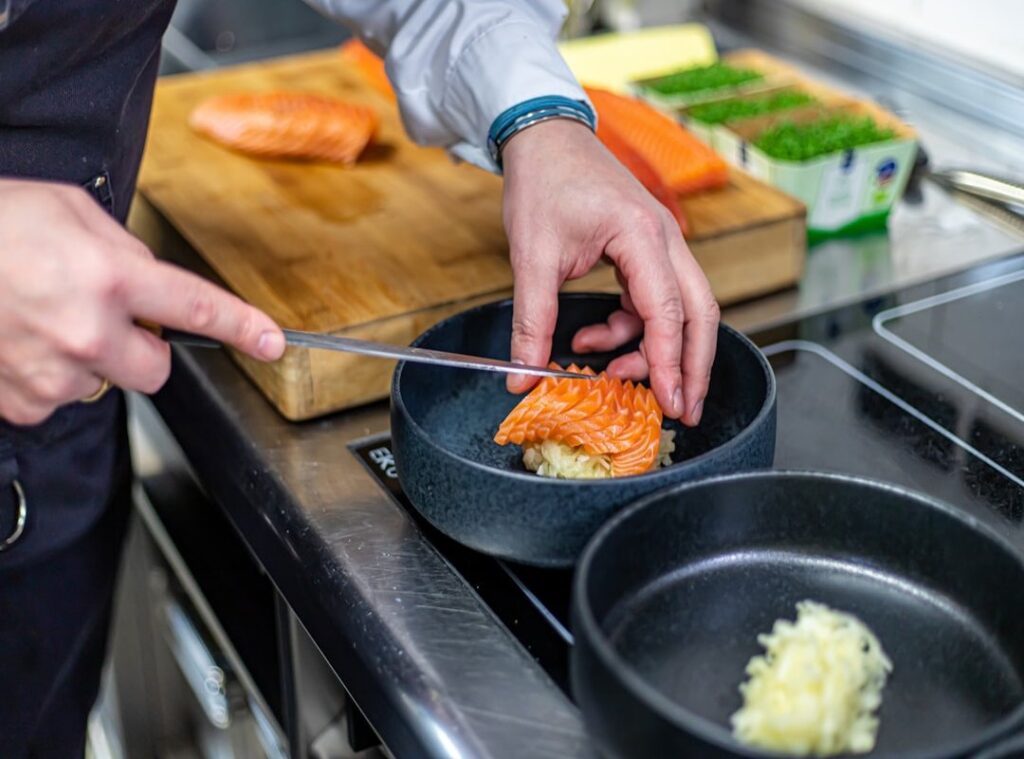
Imagine savoring a Japanese meal, each bite a dance of flavors and textures, a visual delight. But how do you capture this magic at home? It seems daunting, right?
The complexity of Japanese dishes can be intimidating. Yet, it’s not about learning rigid recipes but embracing a mindset of balance and intention. Over years, I’ve delved into culinary philosophies, exploring how heart and soul drive cooking.
This guide isn’t just a collection of instructions; it’s a journey through the japanese flavors kitchen. You’ll learn to create your own authentic experiences, tapping into the core principles that make Japanese cuisine special. Trust this: it’s about seasonality, harmony, and being present in the kitchen.
So, ready to start crafting these experiences yourself? Let’s uncover the secrets together.
The Soul of Washoku: Balance on a Plate
Washoku isn’t just food. It’s a philosophy. A way to bring harmony into the kitchen and into life.
The heart of this approach is ichiju-sansai. It means “one soup, three sides.” Simple. Wholesome.
It gives meals a balanced structure, both in nutrients and flavors. You don’t need fancy ingredients or complex recipes to achieve this. Just a commitment to balance.
Ever heard of the “Rule of Five”? It’s the backbone of Washoku. Goshiki (five) colors: red, yellow, green, black, white.
Gomi (five) flavors: sweet, sour, salty, bitter, umami. Goho. Five cooking methods: raw, simmering, grilling, steaming, frying.
It’s a bit like a culinary puzzle. Each piece has its place, and together, they create something beautiful. Want an example?
Think of a red tomato for color or mushrooms for that deep umami kick.
And let me tell you, when you focus on these elements, meals turn into art. Not just visually, but nutritionally. It’s no surprise that a plate following Washoku principles is both eye-catching and nourishing.
You get all those Japanese flavors in one go. I mean, who wouldn’t want that?
If you’re exploring global cuisines, check out the Middle Eastern Dishes Must Try. It’s another world of flavors waiting to be discovered. But back to Washoku.
It’s not just about health or taste. It’s about a lifestyle. One that respects nature, seasons, and the joy of cooking.
Dive in. Your kitchen will thank you.
Embracing Shun: The Art of Cooking with the Seasons
Let’s talk about Shun. It’s the Japanese term for when an ingredient is at its peak. Not just in flavor, but in nutrition too.
Now, with modern conveniences, we can snag whatever we want year-round. But should we? There’s a deeper connection to nature when you eat seasonally.
Flavors pop in a way they just don’t when forced. Trust me, once you try it, you’ll see what I mean.
Spring
Spring is all about renewal. Tender bamboo shoots are a perfect example. They’re slightly sweet, with a satisfying crunch.
Just simmer them lightly, and you’ll taste spring in every bite. Fiddlehead ferns are another gem, tasting like a mix of asparagus and spinach. Toss them in a quick stir-fry with some soy sauce.
Simple, yet unforgettable.
Summer
Summer brings the crispness of cucumbers. Have you tried them in a sunomono salad? They’re cool, refreshing, and pair beautifully with a splash of vinegar.
Tomatoes are another summer staple. They’re juicy and sweet, perfect for a quick salad with a sprinkle of salt. It’s the season of lively colors and bold tastes.
Autumn
Autumn is for earthy mushrooms. They’re rich and savory, ideal for a rice dish. Imagine the umami!
Then there’s kabocha squash, sweet and hearty. Roast it until caramelized, and you’ve got a dish that warms your soul.
Winter
Winter means it’s time for hearty comfort. Sweet daikon radish in a hot broth is a winter classic. Its mild flavor absorbs whatever it’s cooked with.
Then there’s nabe, a hot pot brimming with seasonal veggies. It’s the ultimate winter warmer.
Following Shun is one of the easiest ways to raise a dish. It’s about embracing what’s naturally available. For a taste of this philosophy, dive into the japanese flavors kitchen.
You’ll never look at food the same way again.
A Feast for the Eyes: Mastering Food Presentation
Ever heard of Moritsuke? It’s the Japanese art of food presentation, and honestly, it’s as key as cooking itself. Imagine a dish so beautifully arranged, it feels like a masterpiece.

That’s the magic of Moritsuke.
But let’s talk about Ma. This principle of negative space (not cramming your plate) is a game-changer. Why clutter your plate when you can highlight each component’s beauty?
Think of it like a well-curated Instagram feed. You don’t want your eyes darting around, right? It’s about balance and breathing room.
Then there’s Utsuwa (the) art of tableware. Ever notice how different plates can make or break the look of your food? The shape, the color, the texture of the plates (even bowls) can change everything.
I once served a dish on a bright blue plate. It looked lively and alive. Next time, try contrasting colors with your food and see what pops.
For the home cook, here’s a pro tip: use a variety of small dishes. It adds dimension and elegance. Arrange your food with height and flow, not just flat on a plate.
It’s not about perfection. It’s about showing you care, being mindful, and enjoying the process.
Curious about how other cultures embrace the art of presentation? Check out the Richness Of African Cuisine. There’s so much to explore in the world of food aesthetics.
In your japanese flavors kitchen, remember presentation matters. How we serve reflects our passion. And who doesn’t want a feast for the eyes?
Building Your Pantry: Five Flavor Foundations
If you’re diving into Japanese cooking, you need a flavor toolkit. First up, Shoyu (soy sauce). It’s not just dark liquid in a bottle.
There’s light shoyu and dark shoyu, each with its own magic. Light shoyu brings a salty punch with a hint of umami, while dark has a richer, molasses-like depth. Believe me, knowing when to use each makes all the difference.
Next, we have Mirin. It’s sweet, syrupy, and oh-so-necessary. Mirin adds a glossy finish to dishes and balances out savory flavors beautifully.
Ever wonder why that teriyaki glaze looks and tastes so perfect? Yup, that’s mirin.
Then there’s Rice Vinegar. It’s mild, not as sharp as Western kinds. Perfect for sushi rice or that tangy salad dressing.
It adds a subtle acidity. You’d be surprised how often a splash of it elevates a dish.
Miso follows. The fermented soybean paste that’s a kitchen important. It comes in several types, but white and red miso are the big players. White is sweet and mild, while red is bolder and intense. Its deep umami flavor transforms soups, marinades, and sauces. Try it, you’ll see.
Lastly, we can’t forget Dashi. It’s the quintessential Japanese stock. Dashi is subtle yet fiercely savory, the backbone of countless dishes.
A simple version? Just simmer kombu and bonito flakes, or if you’re in a rush, go for instant granules.
Master these five, and the doors to endless Japanese flavors open wide. These ingredients aren’t just basics (they’re) your key to a genuine japanese flavors kitchen.
Dive Into the Heart of Japanese Cooking
Remember the intimidation you felt at first? It’s normal. But creating a japanese flavors kitchen isn’t about complex recipes.
It’s about embracing balance (Washoku), seasonality (Shun), and presentation (Moritsuke). These principles don’t just make you a better cook; they turn cooking into mindful practice.
Start small. Choose one principle. Maybe find a seasonal ingredient, or arrange your next meal with more intention.
You’ll see the difference.
This isn’t just cooking (it’s) creating. You’re not just feeding yourself; you’re crafting experiences. Ready to transform your kitchen?
Start now. Heartumental.com.co has all you need to deepen this journey. You can do this.
It’s within your reach. Cook with heart. Feel the difference.
Let’s make it happen.

 Ask Teresa Valdezitara how they got into meal prep efficiency hacks and you'll probably get a longer answer than you expected. The short version: Teresa started doing it, got genuinely hooked, and at some point realized they had accumulated enough hard-won knowledge that it would be a waste not to share it. So they started writing.
What makes Teresa worth reading is that they skips the obvious stuff. Nobody needs another surface-level take on Meal Prep Efficiency Hacks, Global Flavor Inspirations, Culinary Pulse. What readers actually want is the nuance — the part that only becomes clear after you've made a few mistakes and figured out why. That's the territory Teresa operates in. The writing is direct, occasionally blunt, and always built around what's actually true rather than what sounds good in an article. They has little patience for filler, which means they's pieces tend to be denser with real information than the average post on the same subject.
Teresa doesn't write to impress anyone. They writes because they has things to say that they genuinely thinks people should hear. That motivation — basic as it sounds — produces something noticeably different from content written for clicks or word count. Readers pick up on it. The comments on Teresa's work tend to reflect that.
Ask Teresa Valdezitara how they got into meal prep efficiency hacks and you'll probably get a longer answer than you expected. The short version: Teresa started doing it, got genuinely hooked, and at some point realized they had accumulated enough hard-won knowledge that it would be a waste not to share it. So they started writing.
What makes Teresa worth reading is that they skips the obvious stuff. Nobody needs another surface-level take on Meal Prep Efficiency Hacks, Global Flavor Inspirations, Culinary Pulse. What readers actually want is the nuance — the part that only becomes clear after you've made a few mistakes and figured out why. That's the territory Teresa operates in. The writing is direct, occasionally blunt, and always built around what's actually true rather than what sounds good in an article. They has little patience for filler, which means they's pieces tend to be denser with real information than the average post on the same subject.
Teresa doesn't write to impress anyone. They writes because they has things to say that they genuinely thinks people should hear. That motivation — basic as it sounds — produces something noticeably different from content written for clicks or word count. Readers pick up on it. The comments on Teresa's work tend to reflect that.